Springtime Ant Swarms in Katy: Management & Prevention Guide
Springtime Ant Swarms in Katy: What They Mean and What To Do Next
As the Texas wildflowers begin to bloom and the humidity rises, Katy residents know that spring is officially here. However, with the pleasant weather comes a common but alarming sight for homeowners: clouds of winged insects hovering near windows or emerging from baseboards. If you’ve spotted springtime ant swarms in Katy, you are certainly not alone.
While seeing a sudden explosion of "flying ants" inside or near your home can be unsettling, it is a natural biological event. These swarms are a signal that an existing colony is mature and looking to expand its territory. Understanding why this happens—and how to tell if you’re looking at ants or something more destructive like termites—is the first step in protecting your property.
At Accutrol Pest Management, we’ve spent years helping our neighbors in the Katy area navigate the challenges of seasonal pests. In this guide, we will break down what these swarms mean, how to identify the species, and the exact steps you should take to keep your home pest-free this season.
What Are Ant Swarms?
In the world of entomology, these winged ants are known as "alates." Most of the ants you see throughout the year are wingless sterile females (workers) that forage for food. However, once a colony reaches a certain size and age—usually every few years—it produces winged reproductive members.
These alates consist of both males and "princesses." Their sole purpose is to leave the mother colony, mate, and find a new location to establish a satellite colony. This event is triggered by specific environmental cues common in a Katy spring: high humidity, recent rainfall, and temperatures hovering between 70 and 80 degrees.
Why Do They Swarm in Spring?
Spring provides the ideal conditions for survival. Moist soil makes it easier for a newly mated queen to dig a burrow, and the abundant food sources available in the Texas spring ensure the new colony has the energy needed to grow. Unfortunately, "ideal conditions" often include the structural wood or kitchen pantries of your home.
A close-up photo of winged ants on a wooden windowsill during a bright spring day in Texas
Identifying the Culprit: Ants vs. Termites
One of the most frequent calls we receive at Accutrol Pest Management during the spring involves homeowners who are panic-stricken, fearing they have a termite infestation. Because both termites and ants swarm at the same time and both have wings, it is easy to mistake one for the other.
However, the distinction is critical for your home’s structural integrity. Here is how you can tell the difference:
Antennae: Ants have "elbowed" or bent antennae. Termites have straight, beaded antennae.
Body Shape: Ants have a distinct, pinched waist (a three-segment body). Termites have a thick, straight waist that makes their body look like a single cylinder.
Wing Length: Ant wings are unequal in length (the front pair is longer than the back). Termite wings are all the same length and are typically much longer than the body itself.
If you see springtime ant swarms in Katy and notice discarded wings that look like fish scales near your doors or windows, it’s a sign that the mating flight has ended and the insects are moving into the "nesting" phase.
Common Swarming Ants in Katy, TX
Not all ants are created equal. Depending on the species swarming near your home, the level of urgency changes.
1. Carpenter Ants
Carpenter ants are among the largest ants in Texas. While they don't eat wood like termites, they excavate "galleries" inside damp or decaying wood to build their nests. A swarm of carpenter ants inside your home is a major red flag, often indicating that there is a mature colony already living inside your walls.
2. Red Imported Fire Ants
Katy is famous for its fire ant mounds. While we usually see them in the yard, they do produce winged alates that can fluctuate near entry points. Fire ant swarms are more of a stinging threat than a structural one, but they can quickly take over a landscape.
3. Odorous House Ants (Sugar Ants)
If you see small, dark winged ants in your kitchen, they are likely odorous house ants. They are attracted to sweets and moisture. While they don't cause structural damage, they can contaminate food and are notoriously difficult to eliminate with DIY methods.
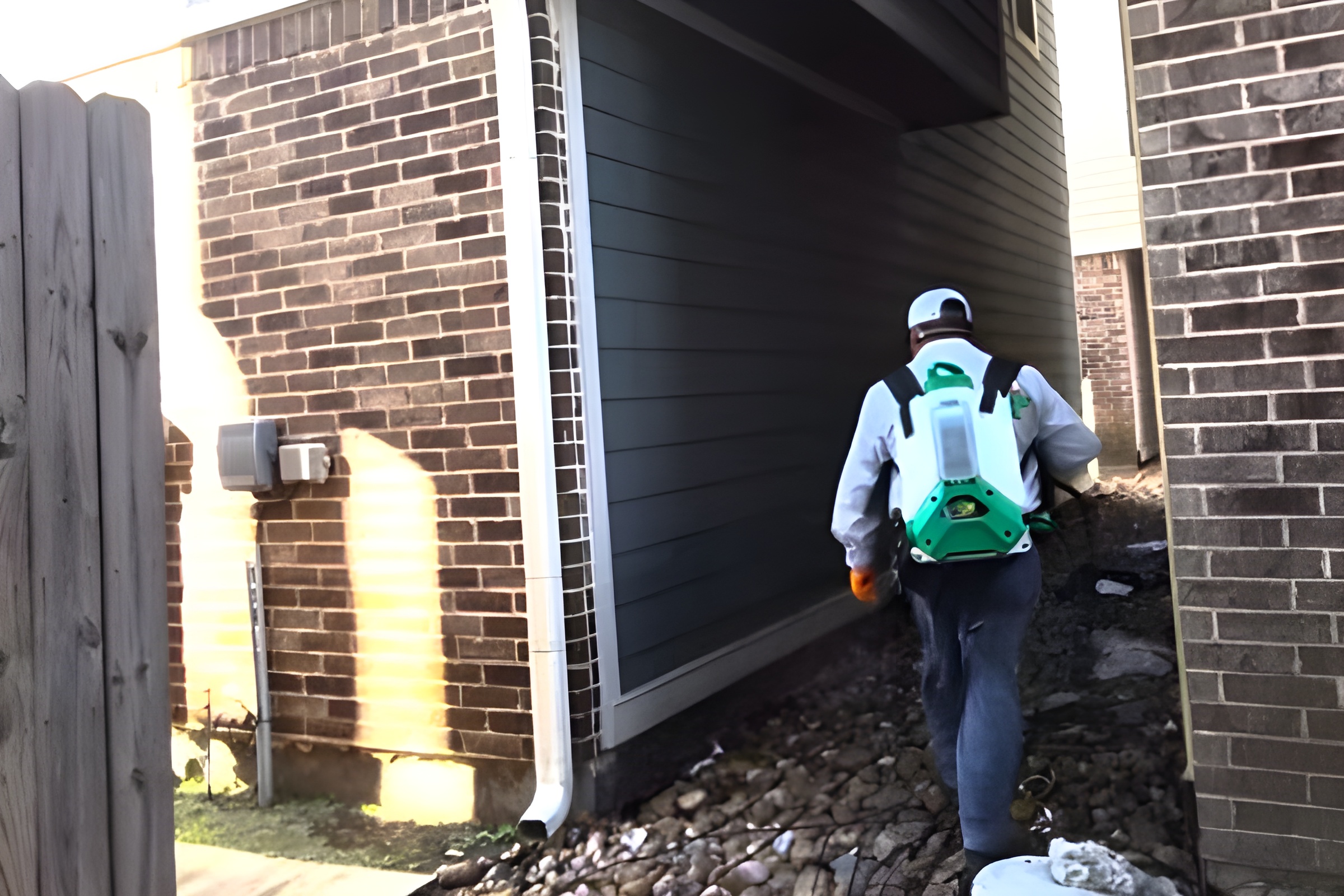
Professional exterminator inspecting the exterior perimeter of a brick home in Katy, Texas, for ant entry points
What To Do If You See a Swarm
If you find yourself in the middle of a swarm, don't panic. Follow these steps to manage the situation effectively:
Step 1: Don't Reach for the Bug Spray Immediately
It’s a natural instinct to grab a can of supermarket pesticide and start spraying. However, this often does more harm than good. Most over-the-counter sprays only kill the ants you see on contact. If you are dealing with certain species, like Ghost Ants or Pharaoh Ants, spraying can trigger a process called "budding," where the colony senses a threat and splits into multiple smaller colonies, making the problem much worse.
Step 2: Collect a Sample
To provide the best treatment, we need to know exactly what we are fighting. Use a piece of clear tape to catch a few of the winged insects, or place them in a small sealed bag or jar. This allows the team at Accutrol Pest Management to identify the species and create a targeted plan.
Step 3: Vacuum Them Up
A vacuum is a remarkably effective tool for dealing with an indoor swarm. This removes the insects immediately without spreading chemicals around your living space. Be sure to empty the vacuum bag or canister into an outdoor trash bin right away.
Step 4: Identify the Entry Point
Look for where the ants are emerging. Is it a crack in the baseboard? A gap around a window frame? A hole in the siding? Knowing where they are coming from helps professionals locate the primary nest.
Preventing Future Springtime Ant Swarms in Katy
Prevention is the best form of pest control. To discourage ants from choosing your home as their next nesting site, consider these tips:
Manage Moisture: Fix leaky faucets, clogged gutters, and poorly draining downspouts. Most ants, especially carpenter ants, are attracted to moisture-damaged wood.
Seal the Envelope: Use silicone-based caulk to seal cracks around windows, doors, and utility lines entering the home.
Trim Vegetation: Keep trees and shrubs trimmed so they don't touch the house. These act as "highways" for ants to bypass your foundation treatments.
Store Food Properly: Keep pantry items in airtight containers and wipe down counters daily to remove pheromone trails.
A clean, organized kitchen pantry with food stored in airtight plastic containers to prevent ant infestations
Why Professional Intervention is Necessary
While "ant baits" from the local hardware store might kill a few workers, they rarely reach the heart of the colony. This is especially true during a swarm, as the presence of alates indicates the colony is large and deeply entrenched.
Professional pest control services provide:
1. Expert Identification: Ensuring you aren't treating for ants when you actually have termites.
2. Professional-Grade Termiticides and Baits: Products that are designed to be carried back to the queen.
3. Perimeter Protection: Creating a chemical barrier that prevents new swarms from finding a way inside.
Conclusion: Take Action Against Ant Swarms Today
Seeing springtime ant swarms in Katy is nature’s way of telling you that there is a thriving colony nearby. Whether they are looking for a new home or have already moved into yours, these winged invaders are a sign that your home's defenses need an upgrade.
Don't let a small swarm turn into a massive infestation. By identifying the species early and taking proactive steps to seal your home, you can enjoy the beautiful Texas spring without the stress of unwanted guests.
If you’ve spotted winged ants or termites around your property, let the experts at Accutrol Pest Management take the guesswork out of the equation. We provide comprehensive inspections and tailored treatment plans to keep your Katy home safe and comfortable.
